Open vs enclosed car shipping:

Pros and cons of each transport method

Every customer has different needs for shipping their vehicle. This is why you have the option of open or enclosed vehicle transport.

There are a variety of considerations with both options. Determine what’s best for your specific situation by weighing the pros and cons of each transport method.

Table of Contents
01

Open vs enclosed vehicle carriers

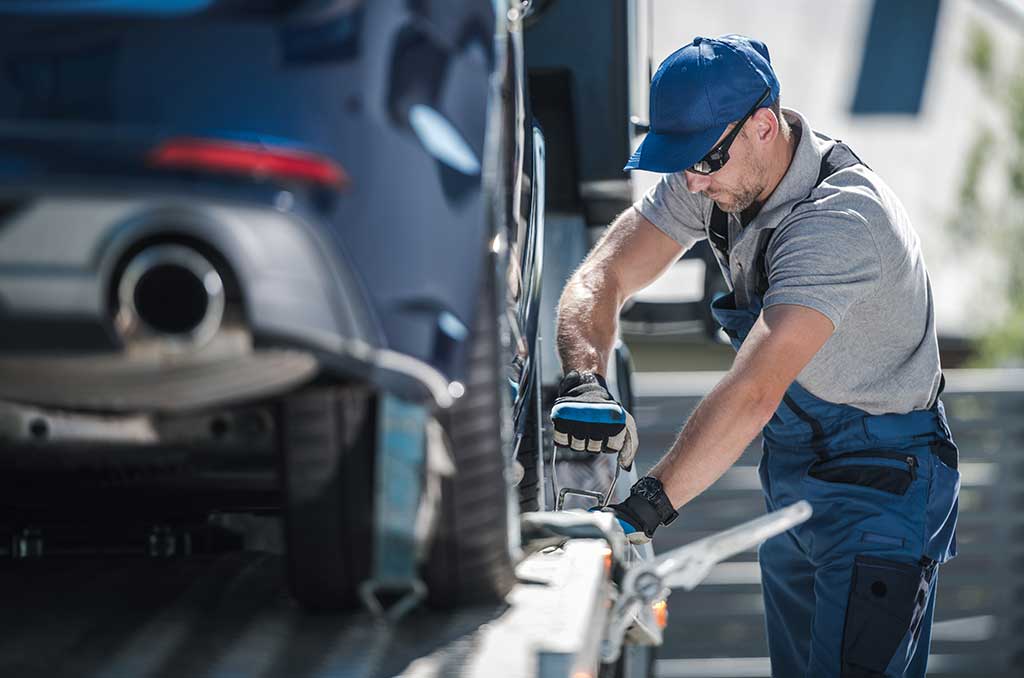
First, you should understand the difference between an open vehicle carrier and an enclosed vehicle carrier. Open carriers are just that, open. No sides or roof, so vehicles are exposed throughout the trip.

auto transportation

The open car carrier involves a diesel truck with the capability to haul a two-level trailer, typically between 75 and 80 feet long. Depending on the size, weight, and current shipping demands, multi-car open carrier trailers can accommodate 8 to 10 vehicles at once. This is the most common type of car carrier.

An enclosed vehicle carrier is a fully enclosed trailer with a roof and four sides. This type of car hauler only allows for a few cars to be shipped at a time. It can be harder to find an enclosed vehicle carrier due to the lower supply of enclosed carriers.

Contrary to open carriers, most enclosed carriers are equipped with either lift gates or low-profile ramps to handle vehicles with a clearance as low as 1″ without damaging the bottom while loading and unloading. But keep in mind that only certain sized vehicles can fit into the enclosed carriers. The dimensions of the enclosed carriers are between 5′ and 8.5′ wide, 8′ and 32′ long and 7′ and 10′ high. It’s important to check with the company you plan to use to determine their specific requirements.

02

Cost difference

Car transport has many different variables that determine the cost of shipping your vehicle. Many people find open vehicle transport to be the best option simply because it’s the most affordable. Open car shipping is more fuel efficient than its enclosed carrier counterpart, which is a big part of why the cost is less.

While open car shipping is more affordable than enclosed, it may be worth the extra cost if you have a high-end, custom or antique car that must be protected. Due to the limited number of carriers offering enclosed service, less demand and lower fuel efficiency, transporting vehicles this way can be approximately $300-$1,000 more than an open car carrier.

There are a couple of options when it comes to enclosed car transportation. Multi-car enclosed trailers can hold up to seven cars and are usually the more inexpensive of the two options. Two- or one-car trailers are understandably more expensive.

03

Exposure to the elements

If you’re planning to relocate a new, luxury, or collector vehicle, you may want to consider an enclosed option.

Weather Car Shipping

A fully enclosed trailer offers better protection from external hazards such as bad weather and poor road conditions providing 360-degree protection with a roof and four sides. The one downside is that because it’s fully enclosed, the driver often is unable to do routine visual checks along the way.

An open carrier offers less protection against the elements and is less secure than a fully enclosed trailer. Your vehicle is exposed to the same elements you’d face while driving, such as sun, snow, dust, debris and other things. However, some customers like the fact that the driver of the open carrier can inspect the cars from time to time during the shipping process.

04

Scheduling and delivery times

It’s easier to schedule transport in an open car hauler simply because there are more of them in operation.

Car Delivery

Scheduling is often more flexible, and you may find quicker turnaround times compared to enclosed shipping. You might even be able to get your vehicle shipped on short notice, which is a big bonus when you’re in the middle of a hectic move.

But it’s also easier to schedule an open carrier because of the number of vehicles it can accommodate. Normally, a covered carrier can only hold 2-3 (or up to 7 with a multi-car enclosed carrier) vehicles compared to an open carrier, which can handle 8 to 10 vehicles. However, an enclosed carrier will have fewer vehicles to pick up, and fewer vehicles to deliver, which may speed up delivery times.

Open transport can take up to 17 days to ship a vehicle cross country and enclosed can take up to 25 days. But it all depends on the driver’s schedule from origin to destination.

05

Insurance policy limits

The insurance limits for open and enclosed car shipping can vary. But, the higher the asset’s value, the more coverage you’ll want your carrier of choice to have.

Car Shipping Insurance

Enclosed car carriers typically carry a minimum of $250,000 and up to $1,000,000 of coverage insurance while the open car carriers carry a minimum of $75,000. This is something to consider when choosing the right type of shipping for your vehicle, especially if it’s a specialty car or antique of high value.

At Reindeer Logistics, we’ve spent decades building relationships with licensed, bonded and insured car carriers across the nation. Our network of car shipping carriers – both open and enclosed – are experienced with moving vehicles of any size or model. All Reindeer car shipping contractors are required to provide proof of required levels of insurance coverage (a minimum of $1,000,000 liability and $100,000 cargo).

06

Fuel efficiency

Shipping a car in an open carrier is more fuel efficient than in an enclosed one.

Fuel Efficiency

First, an open-air trailer generally weighs less than an enclosed trailer, so fuel costs are lower. Also, they can transport more vehicles at once, making it the most cost-effective and fuel-efficient option.

07

Weather impacts

The enclosed shipping method is least dependent on weather conditions because your vehicle is protected from the elements whereas in an open carrier, it’s not.

Weather Impacts

There also may be weather scenarios in which the open car carrier would be unable to continue.

But weather affects both transport methods during certain seasons. Rates tend to be higher at times of the year when the weather is expected to be bad. Also, if the weather prevents the driver from taking the planned route and an alternative must be found, this can delay your vehicle delivery and add to the cost. In essence, it’s important to take the weather and possible climate differences into account when planning your car transport.

The bottom line

When shipping your vehicle, you have a tough choice to make – open or enclosed carrier. There are advantages and disadvantages to both, but the decision is ultimately up to you and your unique situation.

Reindeer’s experts will help guide you to a decision that works best for you. We typically advise customers to get a quote for open and enclosed shipping so they can compare the cost difference for themselves.

No matter your choice, we’re here to help you get your car safely and securely to your destination. Contact us today to get started!

04

Register your car and get new license plates

Unless you’re active military or a student, you will need to register your vehicle in your new state when you move.

Registration and changing over your license plate/registration sticker involve going to the department of motor vehicles (DMV) or the local equivalent.

Register Your Car In another state

While most states have a grace period of 30 to 90 days after you move, you don’t want to put it off too long. It could result in hefty fines or even having your vehicle impounded if you don’t meet the deadline.

Some states allow you to get your registration and license updated at the same visit, or even do it all online, so check before you go. And, each state’s DMV has different paperwork requirements. Typically, you will need your current license, proof of ownership and proof of insurance. But there could be more information required, so do your research.

Other items to be aware of include:

Vehicle inspections and emissions checks:

A car inspection is when a vehicle is inspected to ensure it meets all safety and emission regulations. Every state has its own regulations about what’s required to pass the inspection. Most often, they are inspecting for safety, proper emissions and/or to check the vehicle identification number (VIN). Check out this overview of car emissions tests and inspections in the United States to help you prepare for your new state.

Registration fees vary from state to state:

These can include title fees, personal property taxes, license plate fees, documentation fees, inspection costs, and hybrid and electric vehicle fees. And some registration fees are based on the age, weight or price of the vehicle.

Different plate rules and regulations:

Just like everything else, rules around vanity plates differ by state. Be prepared for what’s allowed, and what’s not, in your new state. Also, local disposal rules for old license plates vary and you may be required to return them to the state.

Skip to content